


Words & photos by Daniel Díaz. Originally published July 8, 2025, by MUNDIAL (Goal.com)
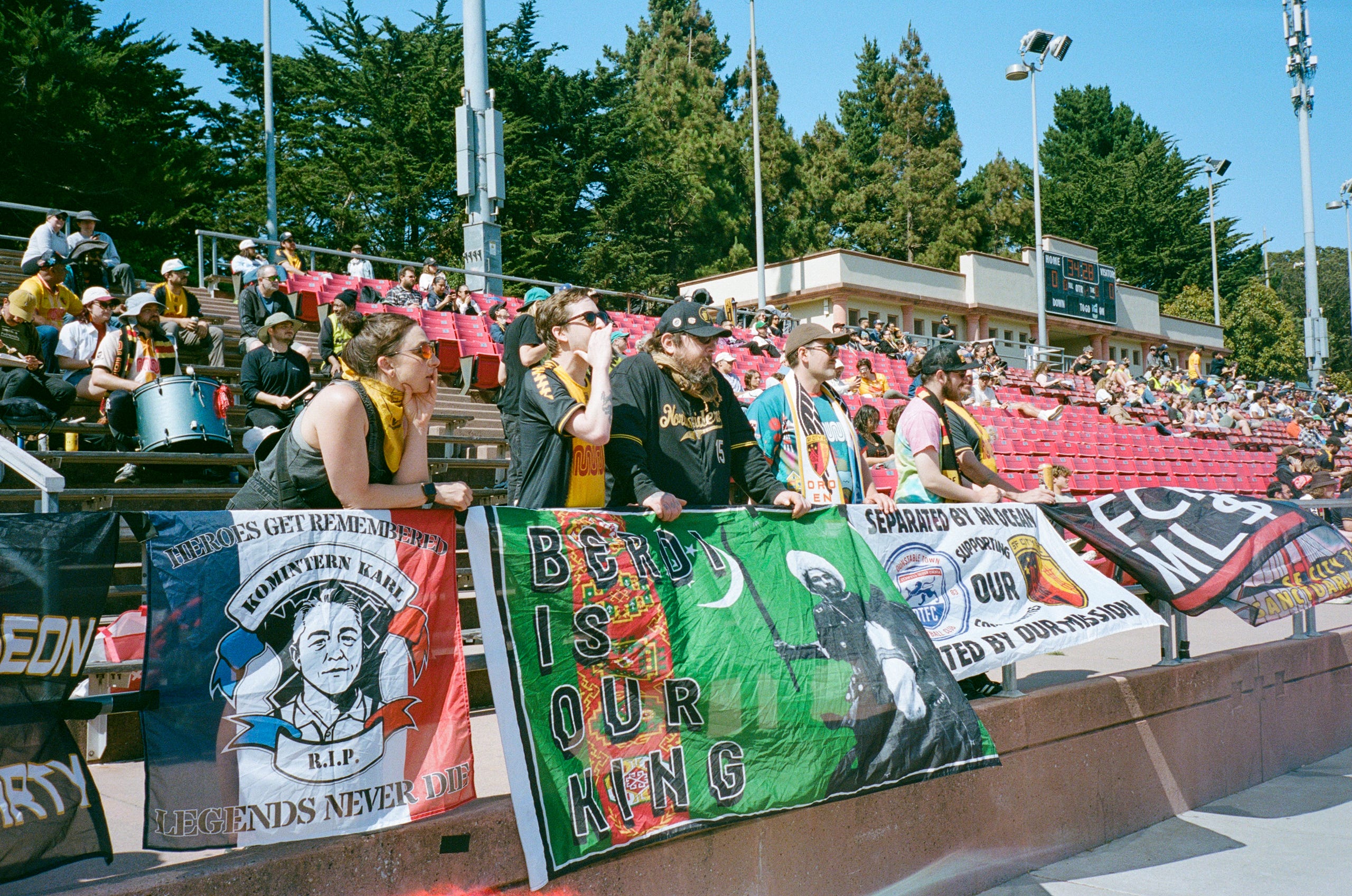
San Francisco has been the home of numerous tide-shifting countercultures, from the historic hippy movement of the 1960s to LGBTQ+ rights activism and the Beat Generation. There is a spirit of resistance, self-expression, and community here that makes the city special. This unique spirit is embodied in the identity of local club San Francisco City FC, the oldest community-owned football club in the country.
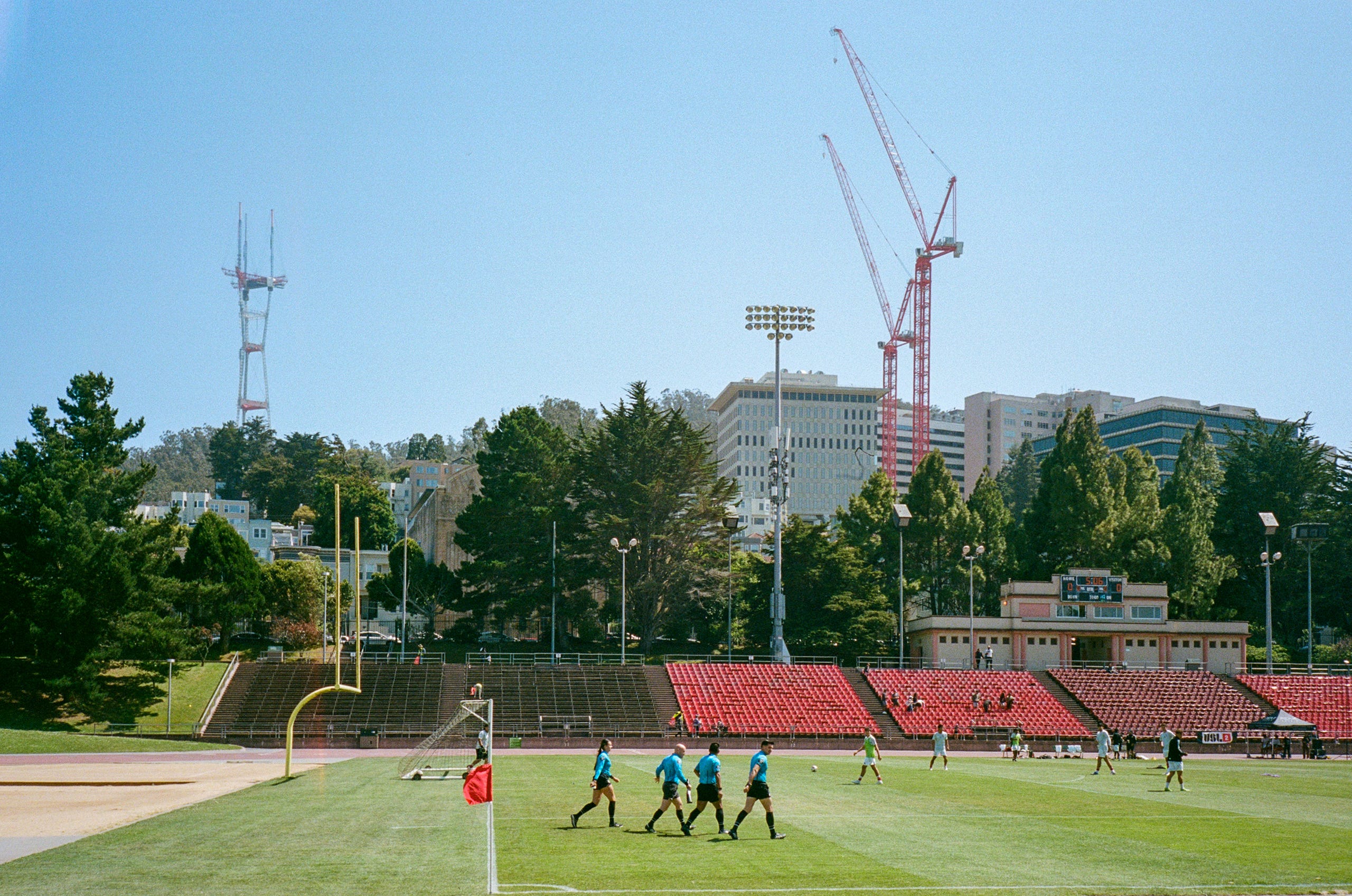
SF City FC had its inaugural season in 2002 and currently plays in the USL 2, a semi-professional league in the fourth tier of US soccer, below the MLS, USL Championship, and USL 1. For ten years, the team in “Iron and Gold” has called Kezar Stadium their home. Nestled in the southeast corner of Golden Gate Park, this century-old ground was once home to the city’s storied NFL franchise—the San Francisco 49ers—and has hosted performances from legendary locals such as Janis Joplin, Carlos Santana, and The Grateful Dead.
Support for SF City FC has been consistently growing in recent years. The club boasted 1,500 attendance at this season’s opening home game, no small feat in a city where soccer competes with three blockbuster franchises in the San Francisco Giants (baseball), the San Francisco 49ers (American football), and the Golden State Warriors (basketball).
On May 9, 2025, San Francisco Mayor Daniel Lurie posted an announcement on Instagram that a new soccer club named Golden City FC (GCFC) would be Kezar Stadium’s newest resident. On June 25, the San Francisco Board of Supervisors voted unanimously in favour of granting GCFC a 15-year permit to use Kezar Stadium, with the option for three additional five-year extensions.
GCFC were co-founded by Geoff Oltmans and Marc Rohrer, who the San Francisco Chronicle describes as ‘finance executives and San Francisco soccer dads’. It came to light that, since 2012, Oltmans has been a major donor to a non-profit founded by the San Francisco Mayor. Reports show his contributions total between $152,000 and $324,987. Additionally, Oltmans’s employer, private equity firm Silver Lake, has donated between $275,500 and $550,992 (Source). San Francisco Recreation and Parks Department, which manages Golden Gate Park and therefore Kezar Stadium, had struck a deal with the GCFC backers that includes private investment for renovations in the public park and gives the new team priority over the stadium schedule. This would leave only one guaranteed fixture for SF City FC per season, effectively displacing the club from its home.
Lurie himself is an heir to the Levi Strauss fortune and ran the city’s most expensive mayoral campaign in history, which included $1 million from his mother and $8.6 million of his own money. (Source)
There are other elements of the GCFC announcement that could cause confusion among local soccer fans. Ian Blackley, an SF City FC board member who is responsible for creative direction, revealed: [GCFC] met with us the day of the announcement and told us they were fans of ours”. This is abundantly clear, since GCFC is also a “City FC” and has adopted the same colour scheme. It’s not far-fetched to imagine locals mistakenly rooting for the wrong City, playing in black-and-yellow at Kezar Stadium.
“It’s about money talking,” Blackley adds. “It’s a shortcut to what we’ve built. We’ve fought hard to be at our stadium. For another team to just throw a bunch of money around and say, “Okay, we’re going to play here now.” It was a shortcut to the hard work we’re doing and building this community, making a club that’s really of the people.”
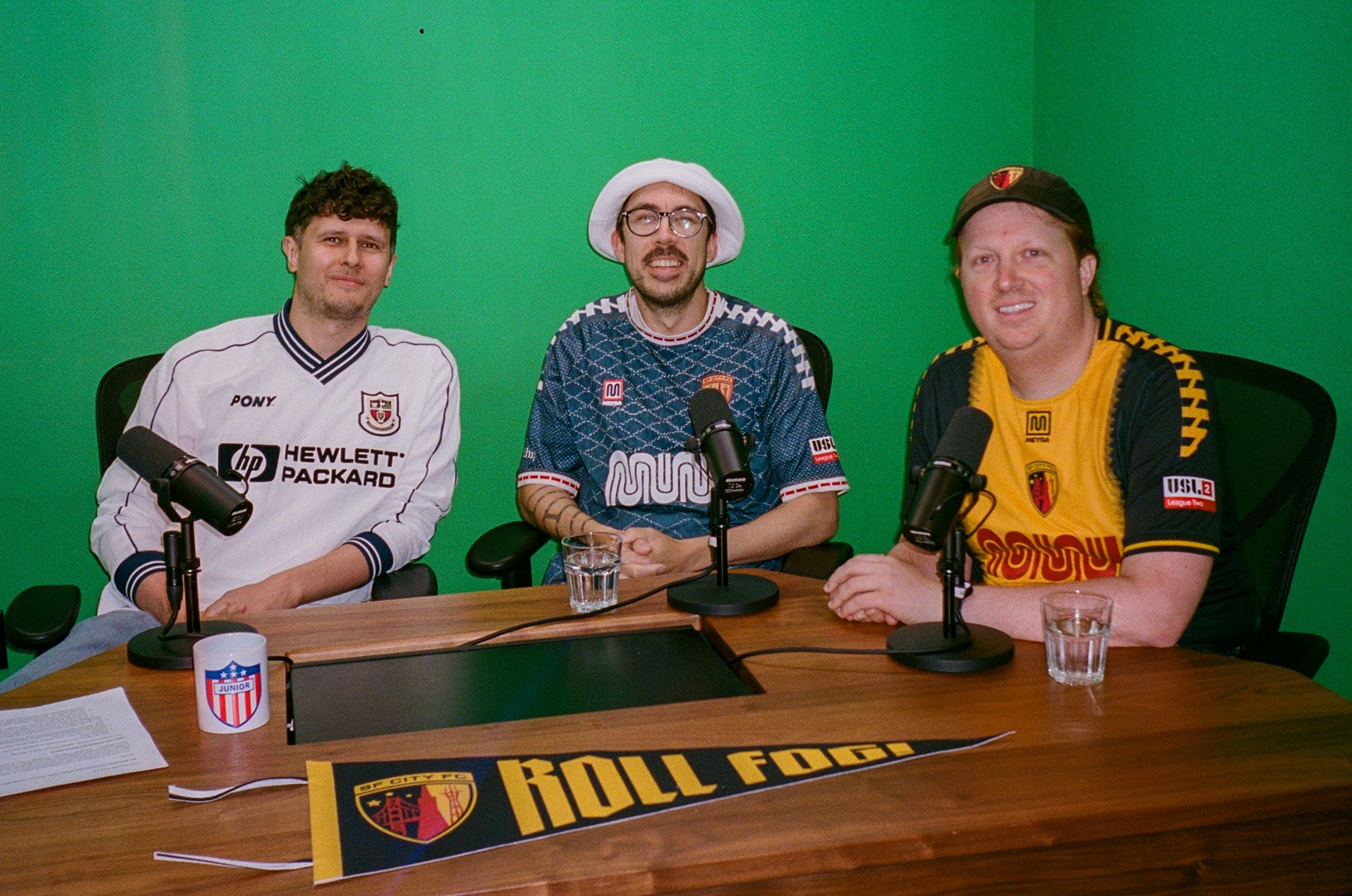
Tyler Hinman, a SF City board member who oversees operations: “Here we don’t have the romance of a small community team getting up into the top leagues just by winning. That’s not possible. We lose some of that romance here, that underdog story. There’s a ceiling because of the money aspect.”
MLS Next Pro has the added sheen of being associated with the MLS, the professional to tier of the US domestic game. “I think people look at that MLS acronym and think the MLS is coming to San Francisco, and that’s really not the case,” says Hinman.
Tyler: “The fan aspect of things is a safeguard. Like the situation with [baseball team], the Athletics at the moment, getting torn out of Oakland, where they’ve had decades of great support, and now playing in this minor league stadium in Sacramento. That’s not something that’s ever going to happen to us. We are 51% supporter-owned, and there’s no such thing as some rich guy coming in and buying up the team and moving us to San Jose. That’s not going to happen. It belongs to the people.”
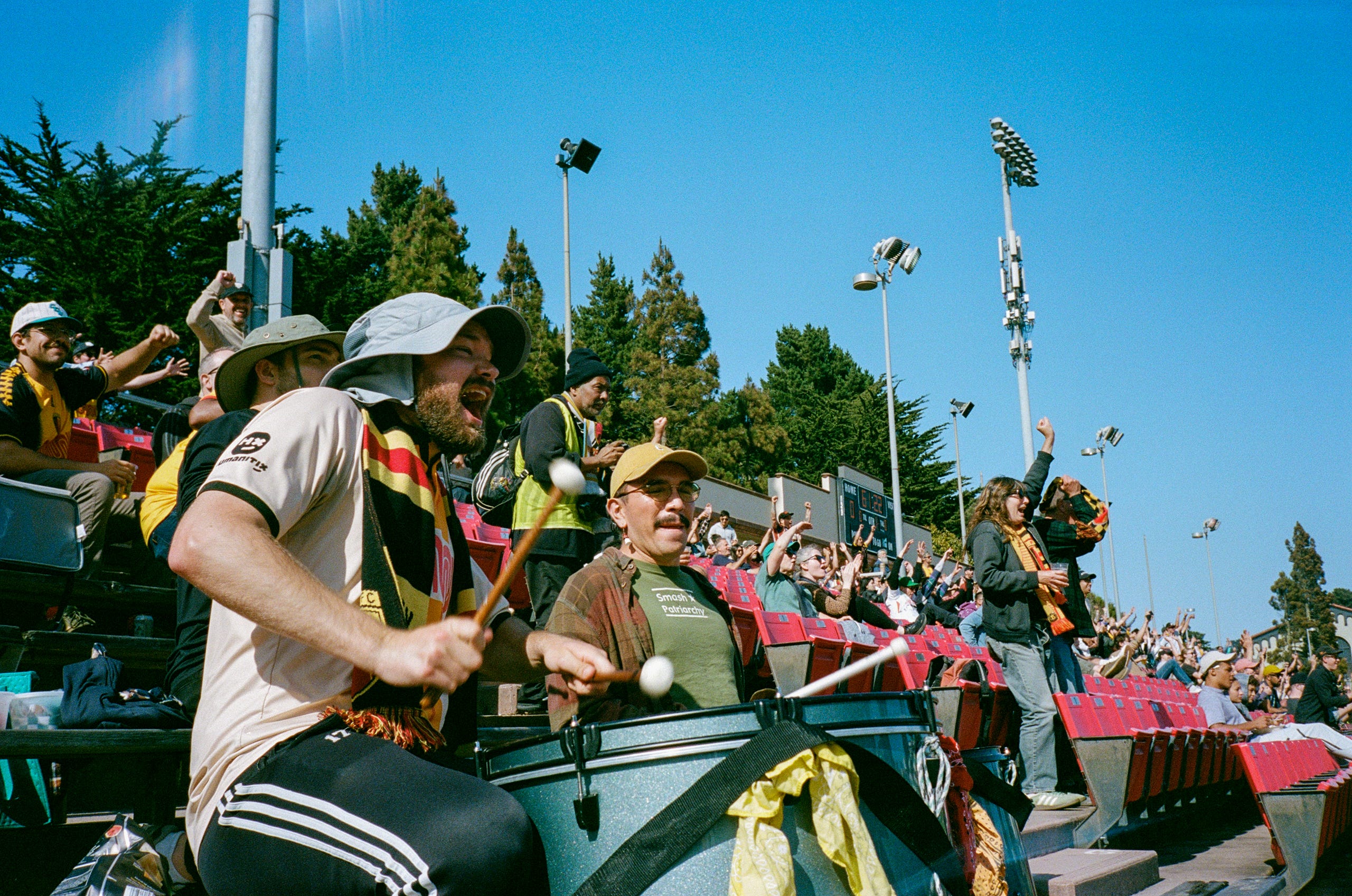
Pete Bogdis is among those people. A Greek-American lifelong Panathinaikos fan, SF City FC board member, and founder of the club’s first supporter group: the Northsiders.
He recalls his first game over ten years ago: “It was me and like two other people at this random park in Redwood City. I joined 100% because of the whole fan ownership thing.”
Together with a group of fans, they set up a supporter group. “We didn’t want to be like other US supporter groups; this is not a money-making enterprise. We want people wearing the club’s stuff, singing their own songs. Doing it differently. Since my example is Greek football, I thought we should name it after where we gather. We happened to be standing on the North side of the pitch.”
Bogdis is committed to the club and defiant in the face of potential displacement: “We’ve been through this before, they can come with all the money they want. I’ve put too much money, sweat, and tears building this club up from nothing to just let them walk all over us. I’m all about bringing football to the people. It’s the people’s game. I’m not scared of these guys. If they kick us out of Kezar, we’ll play somewhere else. I don’t care, this is my club. What they’re trying to do to us is really fucked up.”
The community that SF City has built is best exemplified by its supporter groups. The Northsiders have played an instrumental role in ushering in support through their chants, flags, and atmosphere-building, while also mentoring younger fans from the Kezar Union, an independent youth supporter group started this year.
“We’ve had years of trying to get someone to carry this on to the next generation. So then this year, seeing those Kezar Union kids and that opening game, running up and down with the flag, playing our drum. I gave them our drum. I’ve been mentoring them a little bit. Jake, who’s another original guy, looked at me and he goes, “Are you tearing up?” And I was like, “Yeah! Dude, we’ve talked about this for like five years, and it’s finally happening.”
Kezar Union’s teenage founders, Isaiah, Isa, and Asa, were just trying to find a local team to watch when they discovered SF City. Isaiah recalls their first game: “We lost 1-0, unfortunately, but it was a really fun game. The Northsiders were there. They had set off smoke bombs and it was just a fun time. We loved it. We got to watch the players up close. So from there, we knew that we wanted to come watch more SF City matches and become more involved.”
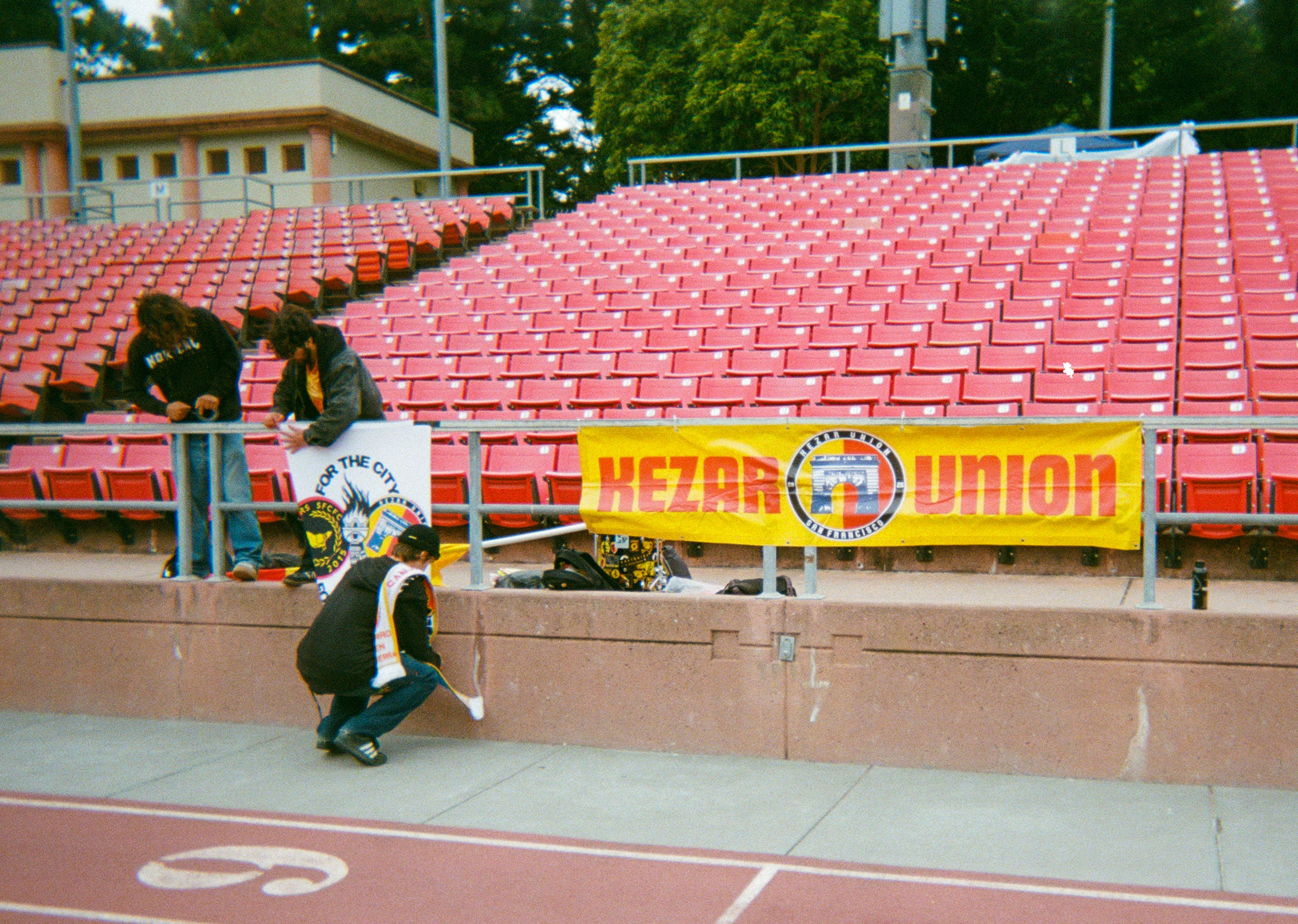
The three 17-year-old high schoolers have a clear objective for the group. The main goal is to be open to all and make as many kids as possible feel welcome within the club, and also to get the people at the games to become a little bit louder. “We’re trying to get more of what a standard European atmosphere would look like,” says Isaiah. “With loud fans and big banners, and flags.
Isa adds: “I think just creating that atmosphere almost builds like a bubble around the stadium that makes someone feel connected. It brings people together. You forget about everything else.”
The support for SF City FC is as much about supporting the city as it is about supporting the team. The Kezar Union members are proud of the way this club represents their hometown:
Asa: “I think the best way of describing San Francisco is as a very harmonious anarchy. You walk down Haight Street, and you find absolute chaos, but in the most beautiful way. And I think that’s reflected in the club, too. In each section, we get the most random collection of people, but they’re all there supporting one another. They supported the team, and it’s always beautiful to see. This is for everyone. This is the people’s sport. This is for the community. And it’s a way to get involved.”
The most recent addition to the supporter groups is the Fault Line Offenders (F.L.O.), whose Instagram account features imagery more reminiscent of British football fans: bucket hats and Stone Island.
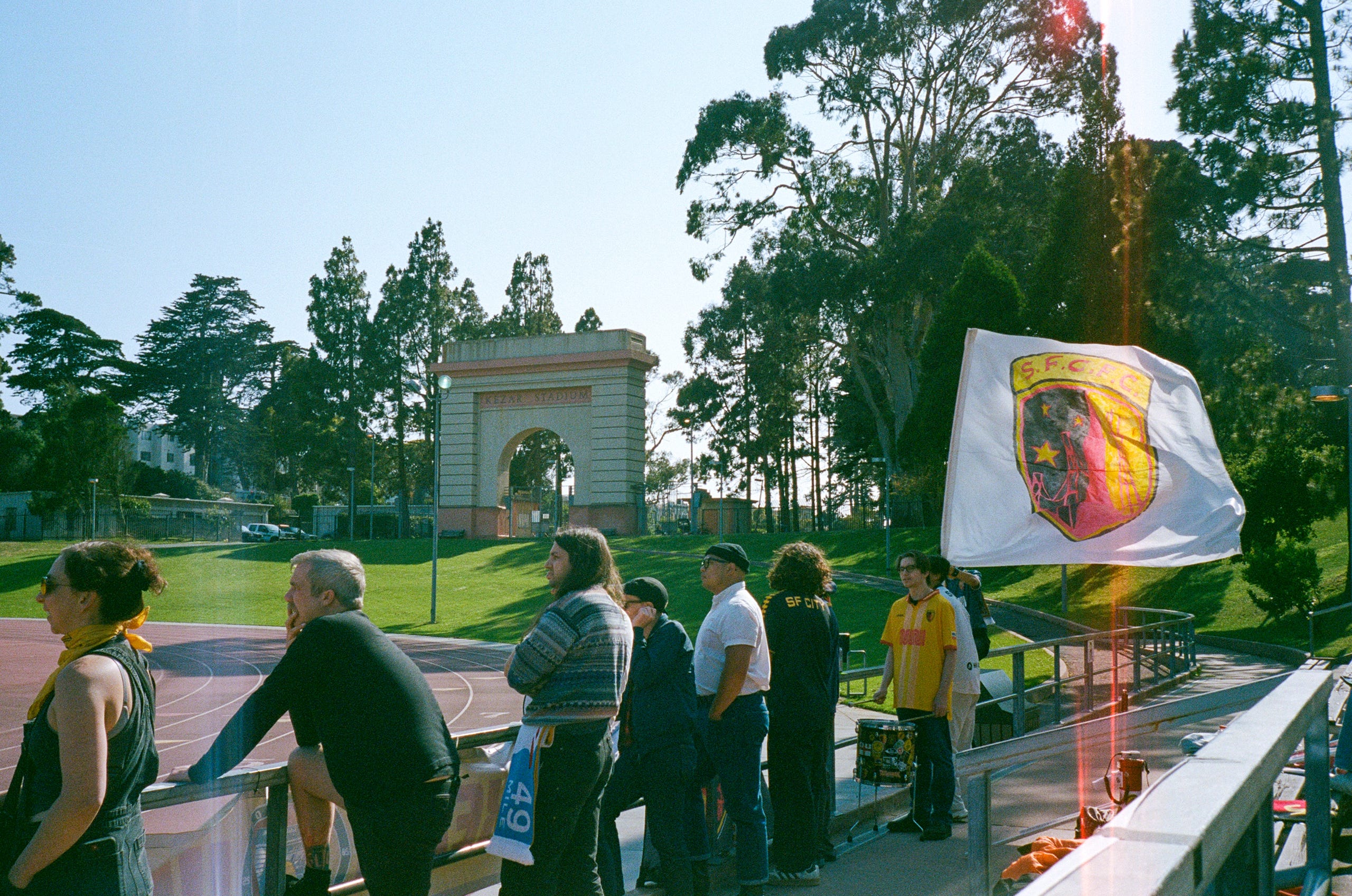
F.L.O. is a group of friends from the SHARPS (Skinheads Against Racial Prejudice) punk scene and were already a crew outside of supporting SF City FC. “We were already big football fans. We wanted to get that experience of supporting a local team and being passionate about something from somewhere you’re from,” says E, a SF City fan and one of the founding members of F.L.O.
E’s cousin plays for the San Jose Earthquakes, the closest MLS franchise to San Francisco, but being able to support a local team is important to him: “People don’t go to local teams as much; they tend to be split by the bars that are aligned with English clubs. People from SF are obsessed with being from San Francisco, so having a team to support is special. Soccer here is growing. It’s still a niche thing to see supporter groups that are really loud and as passionate as SF City FC fans are.”
When the subject of Golden City FC comes up, E is emphatic in his response:
“It’s a money grab; they see how San Francisco is and they want a piece of it. They’re trying to get in anyway they can. They can’t control SF City FC, as it’s controlled by the community. They won’t put money into something that won’t give a return.”
“It’s the same issues that San Francisco sees with gentrification and displacement, translated to soccer. It will split the crowd, and it will do more damage than good. There are a lot of transplants here that aren’t here for the culture. Those are the people who will likely go to Golden City FC. They don’t care about the community.”
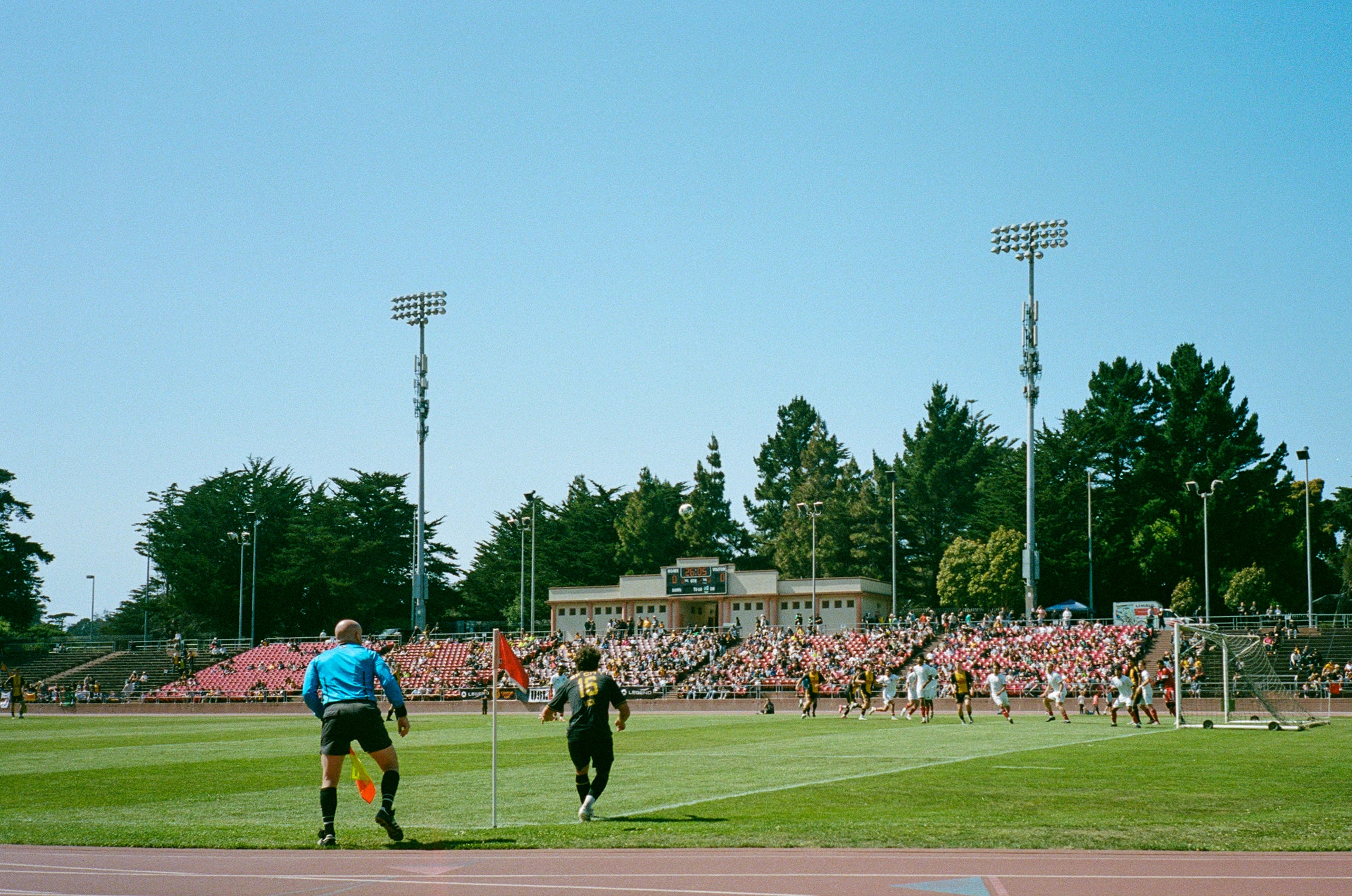
SF City are a classic example of how proper football clubs, no matter how big or small, have always started. The club is organic, grown from the ground up and have managed to foster real connection and meaning within the community. The club is small but has a multigenerational identity that transcends the need to win. Kezar Stadium is a place where you can find your people. If you fell, they would definitely help you get up.
I know this to be true of San Francisco from my own experience living here since 2019. In SF City FC, we have a football club that embodies the best parts of this special city. A club we can be proud of. Our club.